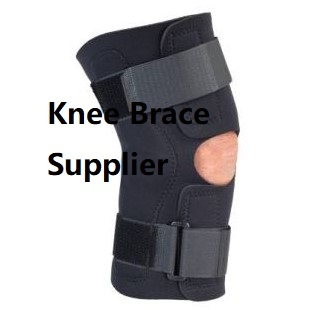
Knee Brace Manufacturer selection should begin with a close look at material choices because materials influence how a support product feels, moves, and performs during everyday use. Sports users may wear support products while running, exercising, cycling, training, or participating in recreational activities, while other customers may use them during routine physical tasks. For commercial buyers, understanding the relationship between materials and intended use can make product evaluation more practical and help create a range that matches different customer expectations.
Stretch Fabric Supports Natural Movement
Flexible fabric is an important part of many wearable support products.
Materials containing elastic fibers can allow the product to move with the body instead of creating unnecessary resistance during normal bending. This can be useful for customers who remain active while wearing support equipment.
Nylon, polyester, and elastane-based fabrics are commonly considered for products where flexibility and fit are important. Each material can have different characteristics, so buyers should evaluate the complete fabric construction rather than choosing according to material names alone.
The way a fabric is knitted or woven can also affect its stretch, surface feel, and ability to maintain its shape.
Neoprene Can Add Structure And Cushioning
Neoprene is another material frequently considered for wearable support products.
Its relatively soft structure can provide cushioning and a close-fitting feel. Depending on the design, it may also contribute warmth and compression around the intended area.
However, the appropriate material depends on the product purpose. A thicker construction may create a different wearing experience from a lighter fabric-based design.
Buyers should therefore consider activity level, expected wearing duration, climate, and customer preferences before deciding whether this type of material belongs in their product range.
Breathability Matters During Exercise
Heat and moisture can affect comfort during physical activity.
When a product is worn during exercise, the body can generate considerable heat. A fabric construction that allows airflow may feel different from a dense material with limited ventilation.
Mesh panels, knitted sections, or moisture-managing textile layers can be considered for products intended for active users.
The location of these materials also matters. Ventilation may be particularly useful in areas where heat and perspiration tend to accumulate.
For retailers, this can be an important consideration when selecting products for customers who expect to wear support equipment during longer training sessions.
The Inner Layer Touches The User
The surface contacting the skin deserves careful attention.
A rough or uncomfortable inner material may affect the wearing experience, especially when a product is used for extended periods. Smooth textiles, soft knitted fabrics, or carefully finished surfaces can provide a more pleasant contact point.
Buyers can evaluate the inner surface by examining samples rather than relying only on product descriptions.
They may also consider how the material behaves after washing, repeated stretching, and regular use. A comfortable material should also fit the intended maintenance requirements of the target market.
Reinforcement Materials Have A Different Role
Some designs require additional structural components.
Depending on the product, reinforcement may involve elastic bands, stays, molded elements, padding, or other components. These parts can influence how the product maintains its intended position during movement.
The challenge is finding a suitable balance between structure and flexibility.
If a design becomes unnecessarily rigid, it may restrict movement. If there is insufficient structure, the product may not provide the intended level of support.
For this reason, buyers should evaluate the complete construction rather than judging individual materials in isolation.
Fastening Components Should Match The Main Fabric
Closures and adjustment systems also form part of the material decision.
Hook-and-loop straps, elastic sections, buckles, or other fastening methods may be combined with textile materials. The connection between these components should be considered carefully because repeated adjustment can place stress on stitching and fabric.
Buyers can inspect samples to see whether fastening components are easy to operate and whether they remain appropriately positioned during ordinary movement.
A well-planned combination can make the product easier for users to put on, adjust, and remove.
Durability Should Be Considered Alongside Comfort
Comfort is important, but commercial buyers also need to think about product service life.
Frequent stretching, washing, friction, and repeated fastening can place stress on wearable support products. Materials should therefore be considered according to the expected frequency of use.
A sports product intended for regular training may face different demands from one intended for occasional use.
Buyers can ask about material behavior, stitching construction, washing instructions, and sample performance before deciding on a larger order.
This helps connect material selection with realistic customer expectations.
Material Combinations Can Create Different Product Experiences
There is rarely a need to rely on a single material throughout an entire design.
Different areas can serve different purposes. A flexible textile may form the main body, while a softer layer contacts the skin. A more structured component can be positioned where additional stability is required, while mesh may be added to improve airflow.
This layered approach gives designers more flexibility when developing products for different applications.
For buyers, comparing complete material combinations can therefore be more useful than comparing individual fabrics separately.
Climate Should Influence Material Decisions
The market where a product will be sold can also affect material selection.
Customers in warm climates may place greater importance on airflow and moisture management. In cooler environments, a warmer construction may be acceptable.
Seasonal purchasing can create additional requirements. A retailer serving customers throughout the year may choose several constructions to address different conditions.
Understanding the local market before production can help buyers avoid selecting a material combination that does not fit actual customer preferences.
Samples Help Confirm Material Choices
Material specifications can provide useful information, but physical samples give buyers a better opportunity to evaluate the complete product.
A sample can be stretched, worn, adjusted, washed according to its care instructions, and inspected after use.
Buyers can examine whether the fabric feels comfortable, whether the product stays in position, and whether different components work together naturally.
Sample testing can also reveal small design details that may not be obvious from photographs.
For bulk purchasing, this stage can help reduce uncertainty before production begins.
Why steriger Can Support Material-Focused Product Development
steriger works with businesses looking for support products designed around different active and everyday applications.
Material selection can be considered together with product structure, sizing, fit, fastening methods, and intended use. This gives commercial buyers a broader basis for evaluating which construction may suit their market.
For businesses developing their own product range, material discussions can also be connected with packaging, branding, sample approval, and production planning.
The objective is to create a product configuration that reflects practical customer requirements rather than selecting materials based only on appearance.
A Practical Material Evaluation Process
Buyers can approach material selection through several simple questions.
Will customers wear the product during intense activity or routine movement?
How long is it expected to be worn?
Does the target market require greater airflow?
Should the product feel soft against the skin?
Is additional cushioning or reinforcement needed?
How will the product be cleaned and maintained?
Will the selected materials work well with the fastening system?
Answering these questions can help narrow down suitable construction choices.
Building A Product Around Real Usage
Material selection should ultimately connect with the way customers will use the product.
Flexible textiles can support movement, softer inner layers can influence comfort, breathable sections can address heat and moisture, while reinforcement and fastening components can contribute to product structure.
No single material needs to determine the entire design. A carefully planned combination can provide different functions within one product.
For retailers, distributors, and private label businesses, this approach creates a clearer way to compare products before placing an order.
steriger can be considered when developing support products around different market requirements, material preferences, and intended applications. Product options are available at https://www.steriger.com/product/
 Bui
10 minutes, 52 seconds
Bui
10 minutes, 52 seconds