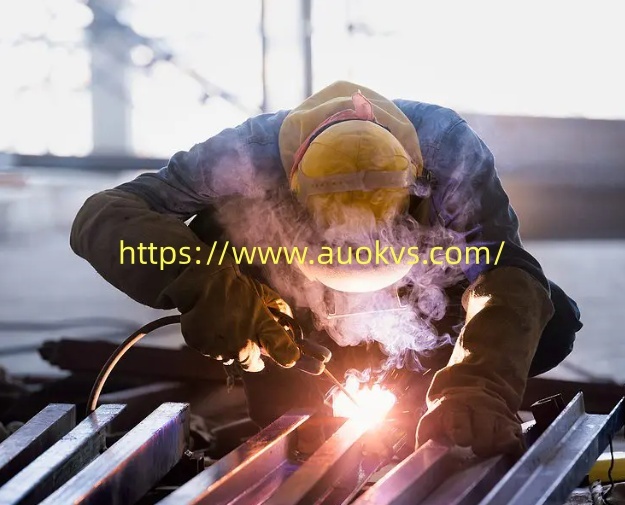
Custom Parameter Welder can serve manufacturers that handle different materials, component designs, and production tasks within the same facility. A single fixed setup may not suit every project when material thickness, joint structure, working position, or production method changes. Adjustable control functions give manufacturers more room to match the machine with the actual task, making this type of solution relevant across several industrial sectors.
Why Is The Automotive Industry A Suitable Application?
Automotive manufacturing involves many metal components, and each component can have different joining requirements. Frames, brackets, body structures, supports, and other parts may vary in material, shape, thickness, and joint position.
A configurable machine allows operators to adjust relevant settings according to the part being processed. This can be useful when a factory produces several component types instead of repeating one identical task throughout the production day.
Automotive suppliers may also work with different production schedules. A machine used for prototype work may require a different configuration from one used for regular component production.
This flexibility allows manufacturers to consider the actual process instead of applying identical settings to every project.
How Can Metal Fabrication Businesses Benefit?
Metal fabrication covers a wide range of products. Workshops may produce frames, cabinets, brackets, supports, agricultural components, machinery parts, and custom structures.
Because these products differ considerably, the required operating conditions can also change.
One project may involve relatively thin sheet material, while another may involve heavier structural sections. Joint positions can also vary, with operators working on flat, vertical, horizontal, or more complex surfaces.
Adjustable settings give fabricators the ability to modify their working approach according to the project. This can be particularly useful for businesses handling customized orders where the next production task may differ from the previous one.
Where Does Heavy Machinery Manufacturing Fit?
Heavy machinery producers often work with large structural components. Frames, support structures, housings, buckets, brackets, and reinforcement sections can involve different material thicknesses and joint arrangements.
The production process may also include both repeated components and customized parts.
A configurable machine can provide greater flexibility when operators need to move between these tasks. Instead of maintaining a separate fixed setup for every component category, manufacturers can consider whether one adaptable configuration can address several related processes.
This can be relevant to agricultural machinery, construction machinery, material handling products, and industrial machinery manufacturing.
Can Construction Related Manufacturing Use Flexible Machines?
Construction product manufacturers often produce structural frames, supports, panels, brackets, doors, railings, and other metal assemblies.
The dimensions and structures of these products can vary considerably. A manufacturer producing several product categories may therefore require different operating conditions during the same production cycle.
Adjustable controls can make it easier to respond to these differences. Operators can select suitable settings based on material type, joint design, and working position.
For manufacturers supplying customized construction components, this flexibility can be especially useful because production may change according to individual customer orders.
How Does Agricultural Machinery Production Benefit?
Agricultural machinery includes tractors, implements, frames, attachments, supports, and other metal components. These products often combine different structural parts within one finished machine.
Manufacturers may therefore need to handle several joining tasks during production.
For example, a frame section may require one set of operating conditions, while a smaller bracket or reinforcement piece may require another. Having adjustable controls gives operators more options when moving between these applications.
Seasonal demand can also influence production planning. Agricultural product manufacturers may experience changes in order volume during different periods, making adaptable production resources useful for responding to changing workloads.
Which Other Industries Can Use These Solutions?
Industrial machinery, transportation components, repair services, metal furniture, energy related fabrication, and general manufacturing can also have applications for configurable machines.
Repair workshops may encounter different materials and component shapes from one job to another. A machine with adjustable functions can provide flexibility for these changing tasks.
Transportation component manufacturers may work with frames, supports, brackets, and structural assemblies requiring different process settings.
Metal furniture manufacturers can also benefit when producing tables, shelves, frames, cabinets, and customized structures with varying dimensions.
The common factor across these industries is process variation. When the production task changes frequently, having appropriate adjustment options can make the machine easier to adapt to the working environment.
What Should Manufacturers Consider Before Choosing A Solution?
Industry type alone should not determine product selection. Manufacturers should first examine the materials they process, component dimensions, joint structures, production volume, operating environment, available power source, and required control functions.
The working position should also be considered. A process performed on a flat surface may have different requirements from one performed vertically or in a confined location.
Production frequency is another factor. A factory producing one repeated component may have different needs from a workshop handling customized orders throughout the day.
Manufacturers should also consider accessories, operator preferences, maintenance arrangements, and future product development plans.
A clear requirement list can make communication with a supplier more efficient and reduce unnecessary adjustments during the development stage.
How Can Auokvs Support Different Manufacturing Applications?
Auokvs provides machine solutions that can be considered for different manufacturing environments and application requirements. The development process can take into account materials, production methods, operating conditions, control preferences, and intended usage.
For manufacturers working across multiple industries, an application based approach can be useful. Instead of choosing a machine according to industry name alone, buyers can describe the actual tasks that need to be completed.
This information can then form the basis for discussing suitable functions, control arrangements, accessories, and configuration options.
Such communication is particularly useful for manufacturers that handle changing product designs or customized orders.
For companies evaluating configurable machines for different industrial applications, product categories and available solutions can be reviewed at https://www.auokvs.com/product/ as a natural next step when planning equipment selection.
 Soniabosch
8 minutes, 3 seconds
Soniabosch
8 minutes, 3 seconds