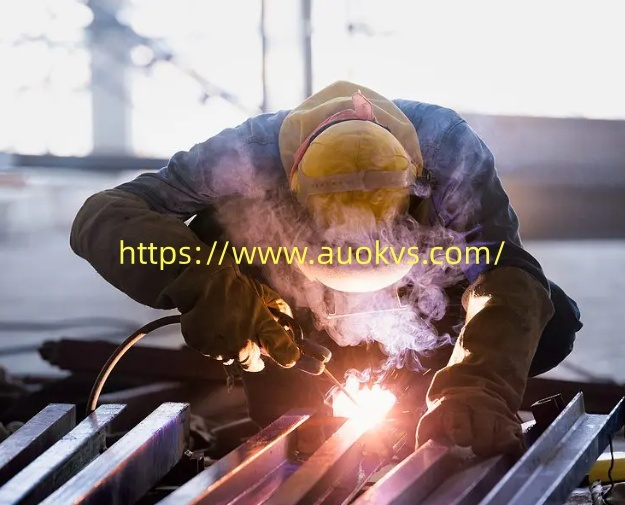
Custom Parameter Welder equipment can support industries that need welding settings matched to different materials, joint structures, production processes, and working environments. Rather than using one fixed setup for every task, manufacturers may require adjustable welding parameters for steel fabrication, machinery production, construction projects, automotive components, maintenance work, and specialized metal processing. Auokvs provides welding equipment solutions for different industrial applications and supports buyers with machine selection, configuration discussions, testing, and project planning.
Metal Fabrication
Metal fabrication shops handle many types of workpieces.
One order may involve thin sheet material, while another may require thicker sections or different joint arrangements.
These changes can affect the required welding process and machine settings.
A configurable machine can help operators adapt the setup according to the material and joint structure.
Fabricators should consider workpiece thickness, joint type, production volume, and workshop conditions before selecting equipment.
This helps connect machine selection with actual fabrication routines.
Construction Projects
Construction sites can involve structural frames, supports, brackets, pipelines, and other metal components.
The working environment may change from one location to another.
Equipment may need to support different materials and joint conditions while remaining practical for transport and on site operation.
Buyers can review portability, power requirements, adjustment methods, accessories, and operating conditions.
For contractors handling different project types, flexible machine settings can make equipment easier to integrate into changing fabrication tasks.
Automotive Manufacturing
Automotive production involves many metal components with different thicknesses and assembly requirements.
Manufacturers may use welding equipment for frames, brackets, housings, exhaust related structures, and other fabricated parts.
Each application can have different process requirements.
The selected machine should correspond with the material, joint design, production cycle, and required finish.
Production teams can also review how easily settings can be adjusted between different workpieces.
A practical setup can help operators transition between tasks without unnecessary equipment changes.
Machinery Manufacturing
Equipment manufacturers often produce components in different shapes and sizes.
Frames, housings, supports, panels, and structural sections may all require welding during assembly.
Because product designs can vary, machine flexibility becomes part of the purchasing decision.
Buyers can review output adjustment, welding modes, control interfaces, connection options, and compatibility with the intended production environment.
For custom machinery, sample testing can help confirm whether the selected configuration matches the actual component requirements.
Agricultural Equipment
Agricultural machinery can contain frames, brackets, supports, and other welded assemblies.
The production environment may require equipment suitable for different steel sections and varying joint structures.
Manufacturers should consider the size of the workpieces, production volume, workshop layout, and maintenance requirements.
A configurable welding system can be useful when several machine models are produced in the same facility.
Clear equipment settings can also make it easier to maintain consistent work procedures between different production tasks.
Maintenance And Repair
Maintenance teams frequently work with changing repair conditions.
A technician may need to repair a bracket one day and reinforce a structural section on another job.
The material, thickness, and joint position may vary considerably.
Flexible welding equipment can allow the operator to adjust settings according to the repair requirement.
Portability and straightforward controls may also matter when work takes place away from a central workshop.
Shipbuilding And Heavy Fabrication
Large metal structures require welding processes that correspond with substantial workpieces and complex joint arrangements.
Fabricators may need different settings for structural sections, brackets, panels, and supporting components.
Equipment selection should consider power supply, welding process, workpiece dimensions, operating environment, and production workflow.
For large projects, repeatability and clear documentation can help teams manage different welding tasks across production stages.
Energy And Industrial Equipment
Industrial equipment used in energy related applications may contain welded frames, housings, supports, and structural sections.
The production requirements depend on the equipment design and selected materials.
Buyers can review welding process compatibility, adjustment range, operating conditions, accessories, testing, and inspection requirements.
For projects involving multiple component types, a configurable machine can support different production steps within the same facility.
Why Parameter Flexibility Matters
Welding performance can depend on several variables.
Current, voltage, wire or electrode selection, material thickness, joint design, and welding position can all affect the process.
A machine that allows appropriate adjustment can give operators more control over different tasks.
This does not mean one configuration suits every application.
Instead, the equipment should be selected according to the production requirements and the skills of the intended operators.
Customization For Special Applications
Some projects require machine arrangements that differ from standard configurations.
Buyers may need specific control functions, connection options, accessories, dimensions, or other application related features.
Auokvs supports customized welding equipment projects and can discuss process requirements, machine configuration, quantities, testing, and packaging.
For customized orders, buyers should provide complete technical information before production begins.
This creates a clearer reference for engineering, assembly, inspection, and future repeat orders.
Sample Testing Before Larger Orders
A sample machine or demonstration can help buyers evaluate the equipment under representative conditions.
Operators can review control functions, adjustment methods, welding behavior, handling, connections, and compatibility with the intended workpieces.
If changes are needed, they can be discussed before larger purchasing commitments.
Testing also gives production managers a practical opportunity to consider operator workflow and training requirements.
Quality Inspection And Consistency
Industrial equipment should be checked against an agreed specification.
Inspection may include electrical functions, control operation, dimensions, connections, accessories, appearance, and general assembly.
For repeated orders, approved configurations can provide a reference for later production.
Buyers can also establish inspection procedures before shipment.
This can help purchasing teams compare delivered equipment with the requirements confirmed during the project.
Packaging, Delivery, And Maintenance
Industrial welding equipment may move between factories, warehouses, construction sites, or service locations.
Packaging should protect controls, connections, accessories, and external surfaces during transport.
Buyers should confirm product identification, carton arrangements, accessories, delivery timing, and documentation.
Maintenance requirements should also be discussed before purchase.
Clear records for equipment configuration, replacement parts, and service procedures can make future upkeep easier to organize.
Why Consider Auokvs
Auokvs provides welding equipment solutions for fabrication, construction, machinery production, automotive applications, agricultural equipment, maintenance, and other industrial projects.
Buyers can discuss process requirements, adjustment functions, machine configuration, accessories, customization, quantities, inspection, packaging, and delivery.
For manufacturers, contractors, distributors, and industrial buyers, supplier evaluation can include sample testing, technical communication, quality procedures, production consistency, and repeat order support.
A practical sourcing process should connect equipment selection with the actual production task.
Build A Practical Equipment Selection Process
A useful process can begin with material analysis and continue through joint evaluation, welding method selection, machine configuration, sample testing, operator review, quality inspection, packaging, and delivery.
Buyers should retain approved specifications and configuration records for future orders.
When production materials or processes change, the equipment settings should be reviewed again.
This helps keep the machine aligned with current production requirements.
Different industries face different welding conditions, which can make adjustable equipment useful for varied production environments.
Fabrication shops, construction companies, automotive manufacturers, machinery producers, agricultural equipment makers, maintenance teams, heavy fabrication operations, and industrial equipment manufacturers may all require different machine configurations.
The suitable choice depends on material, joint design, production volume, operating conditions, operator requirements, and equipment compatibility.
Auokvs provides welding equipment solutions for different industrial applications, with available products and project information at https://www.auokvs.com/product/
 Soniabosch
10 minutes, 2 seconds
Soniabosch
10 minutes, 2 seconds