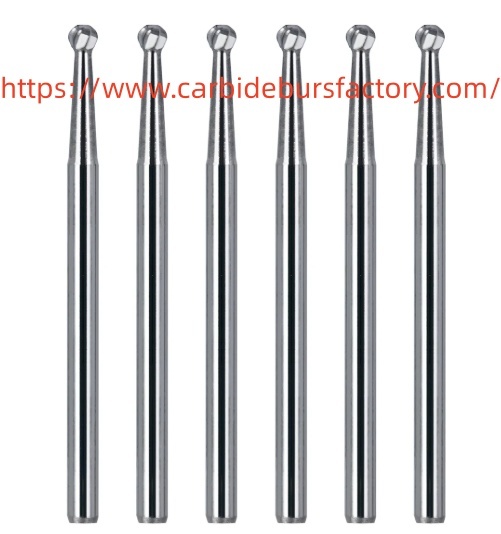
Long Shank Burs are designed for situations where the working area is positioned deep inside a component, cavity, opening, or recessed structure. The extended reach can allow operators to approach surfaces that may be difficult to access with shorter configurations. This makes them relevant to industries where internal geometry is part of the manufacturing challenge, including mold production, automotive processing, foundry work, machinery fabrication, aerospace manufacturing, and industrial maintenance.
Mold And Die Manufacturing
Mold production is closely connected with complex geometry.
Injection molds, casting molds, forming dies, and other shaped components can contain cavities, grooves, transitions, and recessed surfaces. Once the working area becomes deeper, access can become as important as the cutting process itself.
An extended reach design can allow an operator to work farther inside the cavity while keeping the larger part of the handpiece away from the opening.
This can be useful during localized shaping, edge treatment, surface correction, and preparation before polishing.
The actual application depends on the cavity shape, material, required finish, and available machining equipment.
Automotive Component Processing
Automotive components often contain internal passages and recessed structures.
Engine related components, transmission housings, cast parts, brackets, and other metal assemblies can require localized finishing after casting, machining, or fabrication.
When a surface is positioned deep inside a component, a conventional short configuration may provide limited access.
An extended shank can create additional working distance, allowing the cutting head to reach deeper areas while the operator maintains a more practical position outside the component.
This can be useful for internal edge treatment, casting cleanup, port preparation, and localized surface adjustment. Similar deep access applications are documented across automotive and engine related work.
Foundry And Casting Operations
Cast components can have irregular internal structures.
During casting, certain areas may require additional cleanup or finishing after the component has been removed from the mold. Internal pockets, gates, parting areas, and recessed sections can create access challenges.
Foundry workers may therefore require cutting products that can reach beyond the outer surface.
An extended configuration can provide additional reach into these sections, allowing localized material removal without placing the entire handpiece deep inside the workpiece.
The application is particularly relevant when the component is large or its internal geometry prevents easy positioning from the outside.
Machinery Manufacturing
Industrial machinery can include large housings, structural components, frames, and complex mechanical parts.
Some of these parts contain deep grooves, internal edges, recessed surfaces, or enclosed sections.
During fabrication and finishing, operators may need to remove unwanted material or prepare a particular area for assembly.
An extended reach carbide product can provide another option when the working surface sits beyond the convenient range of a standard configuration.
This can help maintenance and production teams approach specific areas without redesigning the entire machining process.
Aerospace Component Production
Aerospace manufacturing involves components with complex shapes and internal features.
Access requirements can vary significantly depending on the geometry of the component.
When a surface is located inside a recessed structure, the operator may need additional distance between the handpiece and the working area.
Extended reach products can support localized finishing and material adjustment in such situations.
However, product selection should always consider the material, component geometry, equipment compatibility, and required surface condition rather than relying on length alone.
The same principle applies to fixture production and other supporting manufacturing operations.
Metal Fabrication And Structural Work
Fabrication businesses can encounter deep sections in box structures, tubular components, frames, and welded assemblies.
Internal weld areas can be particularly difficult to access when the opening is narrow.
A longer configuration can help bring the cutting head into the internal section while keeping the operator outside the most restricted area.
This can support weld cleanup, edge treatment, surface preparation, and localized correction.
The actual suitability depends on the internal dimensions and the amount of movement available around the target area. Extended reach products are commonly associated with internal weld work and structural sections.
Marine And Heavy Equipment Maintenance
Large machinery and marine equipment can contain structures that are difficult to access during maintenance.
A technician may need to process an internal edge, remove unwanted material, or prepare a surface without completely dismantling the surrounding assembly.
In these situations, access becomes a practical production consideration.
An extended reach carbide product can provide additional distance between the operator and the target surface, which may make certain maintenance tasks easier to approach.
This can be useful when equipment downtime, access limitations, and component size all influence the working method.
Why Deep Cavity Work Requires Careful Selection
Longer reach does not automatically make a product suitable for every deep application.
As the distance increases, handling conditions can change. Operators need to consider the shape of the working head, material being processed, equipment compatibility, cutting pattern, cavity dimensions, and required finish.
A product that reaches the target area but does not match the surface geometry may still be inconvenient.
For this reason, selection should begin with the workpiece.
Buyers can identify the target surface, measure the available access space, determine the required material removal, and then compare suitable configurations.
This application based process can make purchasing decisions more practical.
How Carbidebursfactory Supports Deep Processing Applications
Carbidebursfactory provides carbide cutting products for businesses working with deep cavities, internal surfaces, recessed structures, cast components, and complex metal parts.
Different product configurations can be considered according to the working area, material, application, and equipment used by the customer.
For industrial buyers, this provides a practical way to connect product selection with actual processing conditions.
Rather than treating extended reach as a feature that fits every situation, businesses can evaluate where additional access is genuinely required and then select a suitable configuration for that specific application.
Building A Practical Deep Cavity Processing Approach
Deep cavity processing often requires a combination of accessibility, suitable geometry, controlled movement, and appropriate product selection.
Mold manufacturers may focus on cavity finishing. Foundries may need internal casting cleanup. Automotive businesses can encounter deep component passages, while fabricators may work inside welded structures. Machinery and maintenance teams can also face recessed areas during repair and production.
These different applications share one common challenge: the target surface may be located farther inside the workpiece than conventional configurations can comfortably reach.
For businesses reviewing carbide products for these applications, Carbidebursfactory offers options intended for different metalworking conditions and access requirements. The product range can be viewed at https://www.carbidebursfactory.com/product/
 Carbidebursfactory
8 minutes, 52 seconds
Carbidebursfactory
8 minutes, 52 seconds