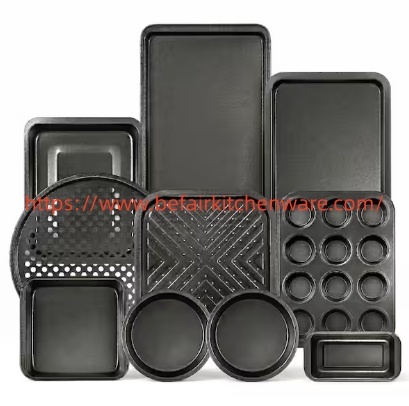
Carbon Steel Bakeware comes in a wide range of shapes, and each design can suit a different type of everyday recipe. Round forms are commonly associated with cakes, while square and rectangular designs work well for brownies, bars, sheet cakes, and similar preparations. Loaf shapes are suited to breads and quick cakes, while shallow trays can handle cookies, pastries, and other flat baked foods.
Round Shapes For Everyday Cakes
Round pans remain a practical choice for home kitchens and bakery production.
Their circular cavity works naturally with layer cakes, sponge cakes, coffee cakes, and other desserts that are served in wedges or built into layers.
The shape also makes portioning straightforward after cooling.
For households that regularly prepare birthday cakes, simple sponge recipes, or weekend desserts, a round design can cover several familiar recipes without requiring a large collection of specialty equipment.
For manufacturers, offering several practical diameter options can give buyers more flexibility when matching recipes with serving requirements.
Square Shapes For Brownies And Bars
Square designs provide a different type of baking surface.
They are useful for brownies, blondies, snack bars, short cakes, and other recipes that are cut into portions after cooling.
The straight edges make it easier to create evenly shaped pieces, which can be helpful when baked goods are prepared for lunch boxes, cafés, family gatherings, or retail presentation.
A square format can also be convenient for storage because several identical pieces can be arranged efficiently after baking.
This makes it a useful addition to a daily baking collection.
Rectangular Shapes For Flexible Baking
Rectangular pans can handle a broad range of recipes.
They are commonly associated with sheet cakes, baked bars, desserts, casseroles, and other preparations where a longer surface is useful.
The larger flat area allows batter or dough to spread across a wider section, creating a different relationship between thickness and baking time.
For households that prepare several types of food in the oven, a rectangular format can provide flexibility beyond traditional desserts.
Commercial kitchens can also use rectangular designs when portioning and presentation need to remain consistent across repeated batches.
Loaf Shapes For Bread And Quick Cakes
Loaf pans have deep, narrow cavities that help dough and batter maintain a defined rectangular form during baking.
They are commonly used for banana bread, pound cake, sandwich-style bread, and other loaf-shaped recipes.
The shape is particularly useful when a recipe needs vertical support rather than a broad, shallow baking surface.
For daily baking, one loaf design can serve both sweet and savory applications.
This makes it a practical option for families and bakeries that produce bread and cake products within the same kitchen.
Sheet Shapes For Cookies And Flat Recipes
Shallow rectangular trays are useful when the food needs a broad baking surface.
Cookies, biscuits, pastries, rolls, flatbreads, and some pizza-style preparations can all benefit from this format.
The open surface makes it easier to arrange multiple portions across one tray.
For busy kitchens, this can help simplify preparation because ingredients can be shaped, spaced, and transferred to the oven in a single batch.
Sheet designs can also be used as supporting trays for smaller baking molds, making them useful beyond direct baking.
Tart And Pie Shapes For Dessert Applications
Tart and pie shapes add another useful category for daily baking.
Round fluted sides can create a decorative edge, while removable bases can make delicate desserts easier to release.
These designs are suitable for tarts, quiches, pies, and similar recipes where the finished edge contributes to presentation.
A bakery that sells both sweet and savory products may find this shape useful because the same general format can support several menu categories.
The design should be selected according to filling type, recipe structure, release needs, and serving style.
Muffin And Small Portion Shapes
Small cavity designs are useful when individual portions are part of the baking routine.
Muffins, cupcakes, mini cakes, and small savory bakes can be produced in separate cavities rather than as one large product.
This can simplify portion control and make finished items easier to package.
For families, these shapes are convenient for preparing individual snacks.
For cafés and bakeries, they can support products intended for grab-and-go displays, boxed assortments, or individual servings.
The number and arrangement of cavities should match the available oven space and expected production volume.
Tube Shapes For Specialty Cakes
Tube designs use a central opening to change the way heat reaches the interior of certain tall cakes.
This format is associated with angel food cakes and other preparations that benefit from a central tube. Professional baking references also identify tube pans as a dedicated form for tall cakes and related recipes.
Although this is not necessarily an everyday requirement for every household, it can be valuable for bakeries with specialty cake products.
For manufacturers, specialty shapes can complement standard designs and help buyers build a more application-focused product range.
Choosing Shapes Around Daily Habits
The right combination depends on what a kitchen actually prepares.
A household that mainly makes cakes may focus on round and square designs.
A kitchen producing bread and breakfast items may place greater emphasis on loaf and sheet formats.
A bakery with a wider menu may require several shapes to cover cakes, cookies, pastries, tarts, muffins, and specialty desserts.
Instead of collecting many designs without a clear purpose, buyers can begin with recipes that are prepared regularly.
This makes product selection more practical and helps avoid unnecessary equipment.
Why Shape Should Be Considered With Size
Shape alone does not determine baking results.
Size and depth also affect how much batter can be used and how quickly the center sets.
Changing from a deep loaf format to a shallow rectangular format can significantly change the thickness of the mixture and therefore the baking process.
For this reason, buyers should evaluate shape together with dimensions, depth, oven capacity, portion requirements, and storage space.
This is particularly important for commercial kitchens where equipment needs to fit existing production routines.
How Befairkitchenware Supports Different Baking Applications
Befairkitchenware provides bakeware options covering practical shapes for everyday kitchen and bakery applications.
The product range can be considered according to recipe type, shape, size, material construction, surface treatment, and intended production environment.
For distributors and private-label buyers, having several familiar shapes available can make it easier to create a product collection aimed at different baking habits.
For bakery operators, the focus can remain on selecting formats that correspond with actual recipes instead of choosing products based only on appearance.
Building A Practical Bakeware Collection
A useful baking collection can begin with a few versatile shapes.
Round designs can cover common cakes, square and rectangular formats can handle bars and sheet-style recipes, loaf designs can support bread and quick cakes, while shallow trays can cover cookies and pastries.
Specialty options such as tart, muffin, or tube formats can then be added according to specific menu requirements.
This approach gives kitchens a logical way to build their equipment around real baking habits.
For manufacturers and buyers, practical shape selection can also make product planning easier because each design has a clear application.
Befairkitchenware offers bakeware products for different baking scenarios, allowing buyers to review suitable shapes according to their kitchen, recipe, and product requirements. The available product range can be viewed at https://www.befairkitchenware.com/product/
 Befairkit
10 minutes, 10 seconds
Befairkit
10 minutes, 10 seconds