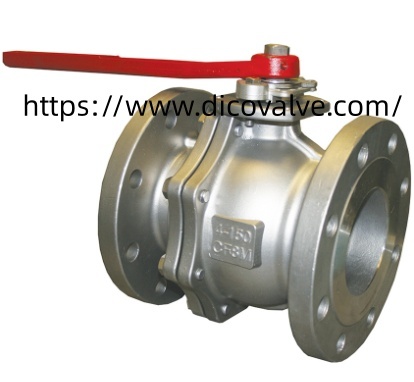
Stainless Steel Flanged Ball Valve equipment is designed for industrial piping applications where reliable flow isolation and a bolted pipe connection are required. Its internal spherical element rotates through a quarter-turn, creating either an open passage or a closed position. Stainless construction can be considered for environments involving moisture, process fluids, and other conditions where material resistance deserves attention. The flanged connection also gives installers a practical method for connecting the equipment with compatible pipeline sections.
How Does the Working Principle Operate?
The operating concept is relatively simple. When the internal opening lines up with the pipeline, fluid can move through the passage. Turning the operating mechanism changes the position of the spherical element until the flow path is closed.
This quarter-turn movement can be convenient for isolation tasks. Depending on the project design, operation may be manual or connected to an actuator. Manual operation can suit accessible pipeline locations, while automated operation may be appropriate when equipment needs to respond to a control system.
The connection arrangement is also important. Flanged installation uses matching pipeline flanges, bolts, and sealing components to create a joined section. This approach can make later removal more manageable when inspection, cleaning, replacement, or maintenance is required.
Why Consider Stainless Steel Construction?
Material selection should be based on the actual working environment rather than appearance alone. Stainless steel may provide useful resistance against moisture and certain corrosive conditions, but compatibility still needs to be confirmed for every application.
The transported medium is one important factor. Temperature, pressure, chemical concentration, cleaning procedures, and surrounding conditions can influence material selection. Internal seats, seals, packing, and other wetted components should also correspond with the intended service.
A water treatment installation, for example, may have different requirements from a chemical processing line. Even when the external equipment looks similar, the internal materials and sealing arrangement may need to change according to the application.
Where Can This Equipment Be Used?
Industrial process plants are a common application area. Production facilities may require isolation points around pumps, storage tanks, processing equipment, and utility lines. Quarter-turn operation can provide a straightforward method for separating sections of a system during maintenance or equipment adjustment.
Water treatment facilities can also use this type of flow-control equipment in selected water and chemical handling applications. The appropriate configuration depends on fluid characteristics, pipeline conditions, installation requirements, and maintenance procedures.
Chemical processing requires particularly careful material evaluation. Different chemicals can interact differently with metals and sealing materials. Engineers should therefore review the complete wetted assembly before confirming a specification.
Food and beverage facilities may also use stainless flow-control equipment in selected process and utility applications. Cleaning routines, hygiene considerations, surface requirements, and the characteristics of the handled medium can all influence purchasing decisions.
HVAC and building utility systems can involve flanged flow-control equipment where larger pipeline sections require accessible connections. Water circulation, heating systems, cooling systems, and utility networks may each have different operating conditions that need to be considered.
Energy facilities, general manufacturing plants, and other process-based operations may also use similar configurations. The important point is that suitability depends on the actual pipeline conditions rather than simply the industry category.
What Should Buyers Compare Before Ordering?
A practical purchasing process should begin with the pipeline requirements. Buyers can confirm nominal pipe size, connection standard, pressure conditions, temperature range, transported medium, and available installation space.
Material grade should then be reviewed alongside the internal sealing arrangement. This becomes especially important when the equipment will handle chemicals, gases, cleaning agents, or other media that may affect internal components.
The operating method deserves attention as well. A manual handle may suit an accessible isolation point, while pneumatic or electric actuation may be considered for systems involving programmed operation.
Buyers can also ask about dimensional drawings, material information, inspection procedures, testing arrangements, and project documentation. Having these details available before production can reduce communication gaps between purchasing teams, engineers, installers, and suppliers.
Why Does Supplier Communication Matter?
Industrial projects rarely involve only one purchasing question. Requirements can change during engineering review, installation planning, or production preparation. A supplier that communicates clearly can make it easier to address these changes before they affect the order.
Dicovalve can work with buyers who need flow-control products for different industrial applications. Discussions can cover connection requirements, material choices, operating methods, project quantities, and customization needs.
This type of communication is useful when buyers are comparing several suppliers. Instead of judging an offer only by its quoted price, purchasing teams can consider how clearly the supplier responds to technical questions and how well the proposed configuration matches the actual project.
How Can Buyers Prepare Before Contacting A Supplier?
Having basic project information ready can make the purchasing process more efficient. Buyers can prepare the medium type, pipeline size, connection standard, pressure and temperature conditions, operating frequency, installation environment, and preferred operating method.
Photos, drawings, or pipeline layouts may also help explain the installation environment. When requirements are clear, suppliers have a better basis for discussing suitable configurations and identifying potential compatibility concerns.
For recurring purchases, buyers can also establish internal approval procedures for samples, documentation, packaging, inspection, and repeat orders. This creates a more organized purchasing process for future projects.
Industrial flow-control selection should reflect the actual conditions of the pipeline. Material compatibility, connection design, sealing components, operating method, installation space, inspection requirements, and maintenance planning all deserve attention before an order is confirmed.
For projects involving water treatment, chemical processing, manufacturing, HVAC, energy facilities, and industrial utilities, a carefully considered configuration can make installation and future servicing easier to plan. Buyers interested in reviewing available products can visit https://www.dicovalve.com/product/ and discuss their project requirements with Dicovalve.
 Midnightechoq
7 minutes, 53 seconds
Midnightechoq
7 minutes, 53 seconds